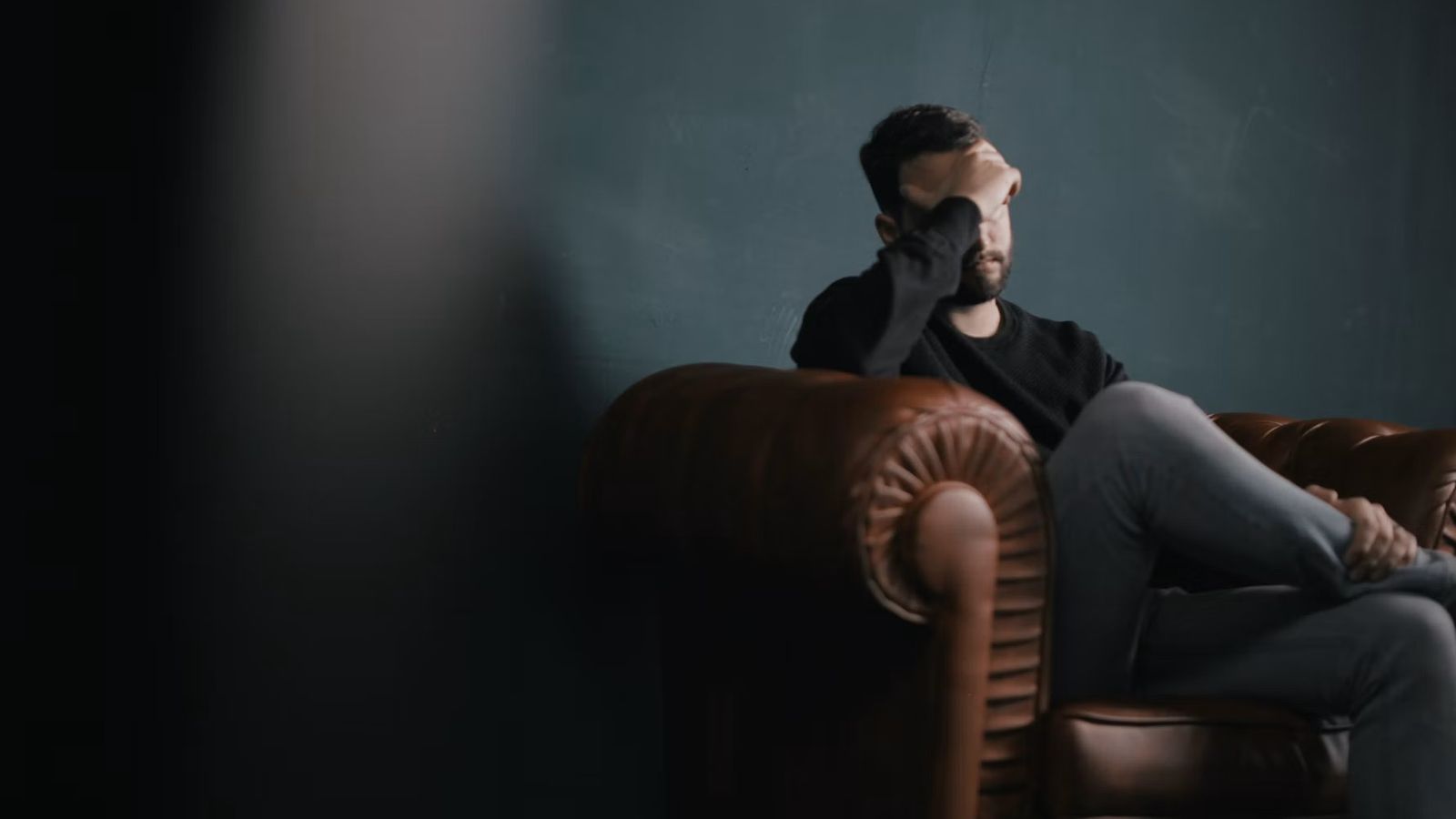
You love your children to bits. And still, there are days when you have nothing left. No patience, no energy, no drive. You do what needs doing, but on autopilot, and at night the guilt of not having been the way you'd like weighs on you.
If this sounds familiar, it doesn't mean you're doing it wrong. It may be parental burnout.
It has a name
It's called parental burnout and it can affect both mothers and fathers. Mothers experience it somewhat more often, mainly because they tend to carry more of the childcare, but many fathers reach their limit too. It shows up in four ways:
- Exhaustion: you wake up drained and the day with the children feels like a mountain.
- You don't recognise yourself: you feel you are no longer the mother or father you used to be, or wanted to be.
- Fed up: you reach a point where you simply can't take any more.
- Distance: you keep caring for them, but inside you switch off, as if you were running on autopilot.
It isn't the normal tiredness of raising children. That goes away with a good rest. Burnout doesn't, and it also takes away the best part: enjoying your children.
More common far from home
A study of more than 17,000 mothers and fathers in 42 countries found that parental burnout is more common in more individualistic countries, where every family is expected to manage on its own. In Switzerland it affected around 7% of mothers and fathers, almost twice as many as in Spain (3.9%). In most Latin American countries the figure was lower.
Support makes the difference. A Chilean study of mothers found that when other people share the childcare, burnout is lower. When you raise children far from your family, with no grandparents to take them for an afternoon and no friends dropping by with a meal, the whole load falls on you, or on you and your partner. And if on top of that you expect yourself to get everything perfect, it all weighs twice as much.
Signs not to ignore
- You shout more than you'd like and then feel terrible.
- You daydream about running away, even just for a few days.
- You find it hard to enjoy your children.
- You sleep badly, get ill more often or live on edge.
- You feel that nobody understands you.
If at any point you have thoughts of harming yourself, or you're afraid of losing control with your children, ask for help today: speak to your doctor or call emergency services.
There is a way out
Burnout isn't fixed with willpower but by rebalancing the scales: fewer demands and more support.
Asking for help isn't a luxury: looking after yourself is also looking after them. A 2025 study of more than 2,000 families, reported by Spain's General Council of Psychology, links parental burnout with more anxiety and distress in teenage children.
In therapy we make room for all of that. For the guilt, for the tiredness, for the person behind the mother or father. We look at what you can let go of, where you can ask for help and how to enjoy your children again without losing yourself along the way.
If you recognised yourself here, the first session is free. You can do it from home, even during the little ones' nap.
Sources
- Pérez-Díaz and Oyarce Cádiz (2020). Parental burnout in Chile and gender: a model for understanding burnout in Chilean mothers. Revista de Psicología, University of Chile (in Spanish)
- Infocop, Spanish General Council of Psychology (2026). Parental burnout, a silent risk for adolescents' mental health (in Spanish)
- Roskam et al. (2021). Parental burnout around the globe: a 42-country study. Affective Science
- Roskam, Brianda and Mikolajczak (2018). The Parental Burnout Assessment. Frontiers in Psychology